

Defense Captain Mark Clark of the Peoria BPP
by Gloria Clark Jackson
Mark Clark (June 28, 1947 – December 4, 1969) was an American activist and the founder and leader of the Peoria, Illinois Black Panther Party (BPP). Mark was instrumental in the creation of the enduring Free Breakfast Program in Peoria, as well as the Peoria branch’s engagement in local rainbow coalition politics, primarily revolving around the anti-war movement in Vietnam. Mark Clark was killed on December 4, 1969 in Chicago, along with Fred Hampton, state chairman of the Illinois Chapter of the Black Panthers, during a predawn Police raid.
Mark was born on June 28, 1947, in Peoria, Illinois. He was the ninth child of Fannie Mae Clark and Pastor William Clark. Mark grew up in a religious home, as his father was the founder of the Holy Temple Church of God in Christ, and he was known from childhood to be stubborn, principled, and possessing great empathy for the underdog and downtrodden. His family members note that as a junior high school student, he regularly attended the Carver Community Center where he practiced acting in performing arts, drawing, painting, and carving.
At the age of 15, Mark joined the Peoria Illinois National Association for the Advancement of Colored People (NAACP) chapter under the leadership of chapter president John Gwynn and vice president Reverend Blaine Ramsey Jr. While Mark was involved in the NAACP, he attended the August 1963 March on Washington for Jobs and Freedom where Martin Luther King Jr. delivered his famed I Have a Dream speech.
Although Mark displayed considerable talent in art, drama, and speech, he was kicked out of school in the 8th grade for fighting a teacher. Mark liked the process of learning, however, Mark did not like school very much due to the racially inhospitable environment that black students were forced to endure. At that time, corporal punishment with a wooden board with holes in it was the norm, and could be given by teachers and principals at their discretion.
Mark attempted to attend Manual High School, but was rejected and prevented from continuing his public education in Peoria. So Mark decided to continue his education through self-study and was autodidactic. After acquiring knowledge that exceeded basic high school equivalency, he enrolled in a few courses at Illinois Central College in East Peoria.
By the time Mark had become 18 y/o, he had already become a target of the Peoria Police Department. Mark was repeatedly beaten and detained on bogus charges, which was a common practice towards young black boys in Peoria at the time, as many police officers were members of the Ku Klux Klan (KKK).
Mark was first introduced to the Black Panther Party in December 1968 through family friend Henry Howard, who was a party member in San Francisco. After Howard successfully encouraged him to join the Panthers, Mark accompanied him to Chicago to pick up reports from the Chicago chapter prior to going to the Central Committee office in Oakland, California. It was on this trip that Mark first met deputy chairman of the Illinois BPP, Fred Hampton.
Upon meeting, Fred Hampton asked Mark to remain in Chicago in order to train and acquire the skills necessary to start a local branch in Peoria. During these months of training, Mark became proficient in leadership, while studying political education, and reading Panther literature, including the Ten Point Program and the BPP rules. During this time, Mark became good friends with Hampton, a friendship that endured throughout their short-lived lives.
By spring of 1969, Mark was inducted into the Black Panther Party by the Central Committee in Oakland, California, and was appointed the party’s Defense Captain. As Defense Captain, Mark took a vow and made an oath to protect and defend the Panthers at all costs. Mark was given the commission to establish a BPP branch in Peoria, Illinois and continued his training with Fred Hampton in Chicago, Illinois until the death of Mark’s father, Rev. William Clark Sr.
On May 10th of 1969, Mark returned to Peoria, Illinois for his father’s funeral. Shortly after the funeral, Mark’s mother and her younger children moved out of the church parsonage where they had been living and moved to Flint, Michigan. The following month, Mark began recruiting members for the Peoria BPP branch, including his sister Gloria and his brother Joseph who became rank and file members.
At only 22 years of age, Mark quickly established the Peoria, Illinois branch of the BPP, and by July 1969, the branch had around 50 official members and 20 affiliates. As the branch’s founder and leader, Mark taught political education classes where he explained that democracy cannot exist within a system that is built upon white supremacy, using a largely Maoist lens. He and other party members read Mao’s Little Red Book in order to study revolutionary tactics.
One of the first assignments of the Peoria BPP was to establish a free breakfast program for kids before school. Mark went to several churches and organizations trying to find a location, but he was rejected over and over again. When the NAACP vice president Reverend Blaine Ramsey Jr. learned of it, he decided to allow Mark to have the free breakfast program at his church, Ward Chapel AME Church. The breakfast for kids program at Ward Chapel lasted only a month, then, Ward Chapel members voted against their involvement with Mark and the feeding program.
Also, at one point, Ward Chapel ousted Rev. Blaine Ramsey as the church’s pastor due to his permitting the Peoria Panthers to use the church facilities for the Free Breakfast Program. And even though the breakfast program took a hit due to not having a stable location, the Peoria BPP under Mark’s directions continued to feed children at various other locations by passing out food baggies in housing projects and in parking lots near school grounds.
Mark also expanded upon the Panthers’ survival program by establishing free clothing and shoe giveaways for children, and was in the process of establishing a free clinic and a sickle cell foundation at the time of his death. These programs were funded by public donations, and solicited through charity and the sale of the party’s newspaper. Mark, as well as the Black Panther Party in general, were vehemently against accepting funds from the government or participating with the government in any way.
Mark remained close comrades with Fred Hampton and was dedicated to the Illinois BPP by visiting the Chicago Chapter every weekend. On a few occasions, the entire Peoria BPP Branch visited Chicago to participate in regional and chapter meetings. During those visits Mark would often address crowds of between 300 and 400 people as the Peoria BPP’s Defense Captain and leader.
On November 13, 1969, a former panther named Spurgeon (Jake) Winters was killed by the Chicago Police in a shootout that also claimed the lives of two police officers and injury to 7 other officers. Everyone in the Illinois Chapter of the BPP and their branches were fully aware that the police would retaliate. That was no secret. It had become an all out panther – police war, and everyone in the party knew it.
On November 26, 1969, Mark made the decision to go to Chicago despite knowing the danger that he would be facing. During that car ride to Chicago, (Chapter 11 of my book), before we dropped Mark off, he stated to me, my brother William, and my mother that we might not see him again. We begged Mark not to go, but Mark was determined and fully aware and ready to defend the BPP with his life. A week later, Mark was dead.
On December 4, 1969, around 4:45 am, the Chicago Police, along with police from Cook County which had been organized by State’s Attorney Edward V. Hanrahan, raided the apartment of Chairman Fred Hampton at 2337 West Monroe Street, using a search warrant for the alleged possession of illegal weapons. (No illegal weapons were ever found). Under the orders given by the State of Illinois, a 14-maned police team shot and killed Mark Clark and Fred Hampton and caused serious bodily harm to Verlina Brewer, Ronald “Doc” Satchel, Blair Anderson, and Brenda Harris, by firing between 90 and 99 shots into the apartment. Only one shot came from the panthers which was ruled as a reflective shot after being hit and killed.
In January 1970, a coroner’s jury held an inquest and ruled the deaths of Mark Clark and Fred Hampton to be justifiable homicide. A $47.7 million lawsuit was filed on behalf of the survivors and the relatives of Clark and Hampton stating that the civil rights of the Black Panther members were violated. The wrongful death lawsuit filed was against the City of Chicago, Cook County, which had been organized by State’s Attorney Edward V. Hanrahan, and the federal government (specifically the FBI). The multiple trials lasted 13 years.
In 1982, the City of Chicago, Cook County which was organized by the State of Illinois, and the federal government all agreed to a settlement in which each department would pay a third amounting to $616,333 each to a group of nine plaintiffs, including the mothers of Clark and Hampton. The $1.85 million settlement was believed to be the largest ever in a civil rights case at that time.
As the last living sibling that was a member of the Peoria BPP, I published a book in 2020 detailing the untold story of Mark’s life, death, and legacy: In my introduction I write, “This book is my concerted effort to make sure that Mark’s legacy is never forgotten nor lost to future generations. Mark was one of many fallen comrades whose names are lesser known and rarely talked about: They were the real heroes of the revolution.”
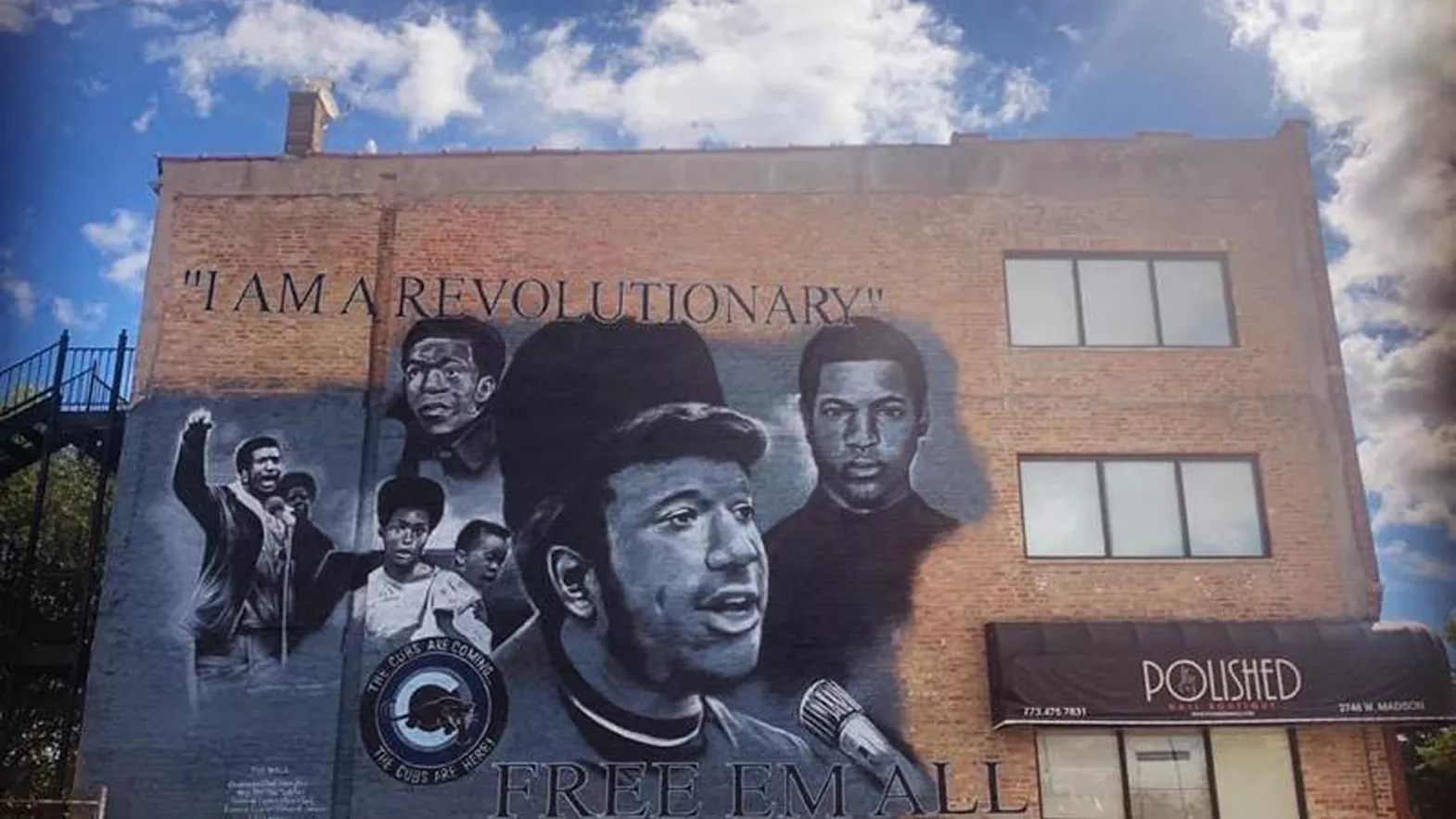
Efforts to honor Mark Clark’s life and legacy have been on-going in Peoria, Illinois and beyond. A mural located at 2746 W Madison St, in Chicago commemorates Mark Clark alongside Fred Hampton on a building just a mile away from where both men were killed. Their deaths were the main feature of the 2017 “Black Panther Party 50-Year Retrospective Exhibit” at the Movement & Justice Gallery inside Chicago’s Westside Justice Center.
Mark Clark has also been recognized with a plaque at Peoria’s African American Hall of Fame Museum, located at the downtown Riverfront Museum. In addition, a scholarship named Seize the Time: in Honor of Mark Clark has been established in his memory for Black African American students who attend Illinois Central College.
Defense Captain Mark Clark gave his life to liberate oppressed people, and he will not be forgotten: Mark will forever be remembered along with that of Chairman Fred Hampton because they both died; they both bled; and they were both revolutionaries. So in the words of the comrades that have fallen and can not speak for themselves, I will speak their words for them: “All power to the people!”